What we can quote, and what we cannot
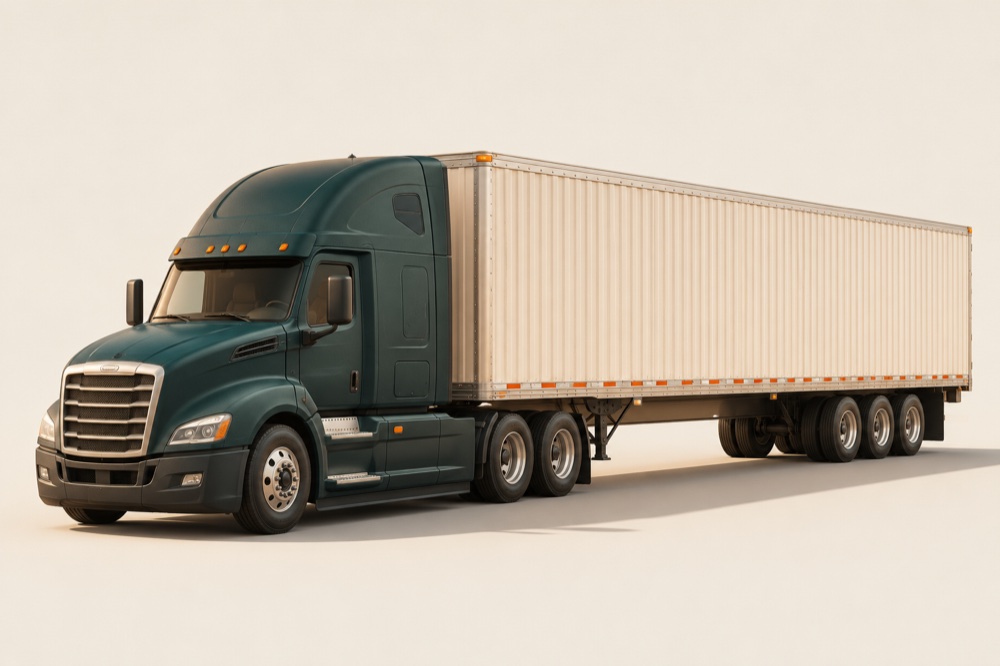
Palletized lumber or flooring, bagged mix, boxed fixtures, cabinet parts, tile, doors that fit a van, and similar packed materials are regular dry van and LTL requests. The freight has to fit the doors, load with a forklift or pallet jack, and be securable inside an enclosed trailer. Loose or oversized beams, bundled structural material that has to ride on an open deck, or freight that must be crane-loaded is not something we quote. Our dry van guide walks through that line.
If a piece can be crated to fit a van, crating can turn a borderline shipment into a dry van shipment. That is your or your supplier’s decision. Send the dimensions of the largest piece and how it will be loaded, and we will tell you whether we can cover it.
Weight, cube, and job-site or warehouse deliveries
Some of this freight is dense and reaches a weight limit before the trailer looks full. Some of it is bulky. Send both the weight and the pallet or piece dimensions. A few pallets usually belong on LTL; a full or nearly full trailer belongs on a dedicated dry van.
Deliveries to warehouses and distribution yards are the cleanest fit. If the delivery is a limited-access site, a location without a dock, or a site that needs a liftgate, say so up front so the quote includes it. See accessorial charges. We quote this freight from Southern California suppliers and warehouses to Arizona, Texas, Nevada, and the rest of the 48 states, and inbound into California jobs and yards.
Weather and freeze protection
Some adhesives, compounds, and finishes cannot freeze, even when the rest of a building-materials load is a simple dry van. In cold weather, tell us if any of the product needs freeze protection; a reefer set to protect from freeze may be the right equipment for that shipment, or for the portion that needs it. See chemicals and paint freight when the product is closer to that category.
What to send
- What the material is, and how it is packed (pallets, boxes, crates, or loose)
- Length, width, and height of the largest piece, plus total weight or pallet count
- How it will be loaded and unloaded
- Origin and destination city or ZIP, and whether the site has a dock
- Any freeze-protection or keep-dry requirements