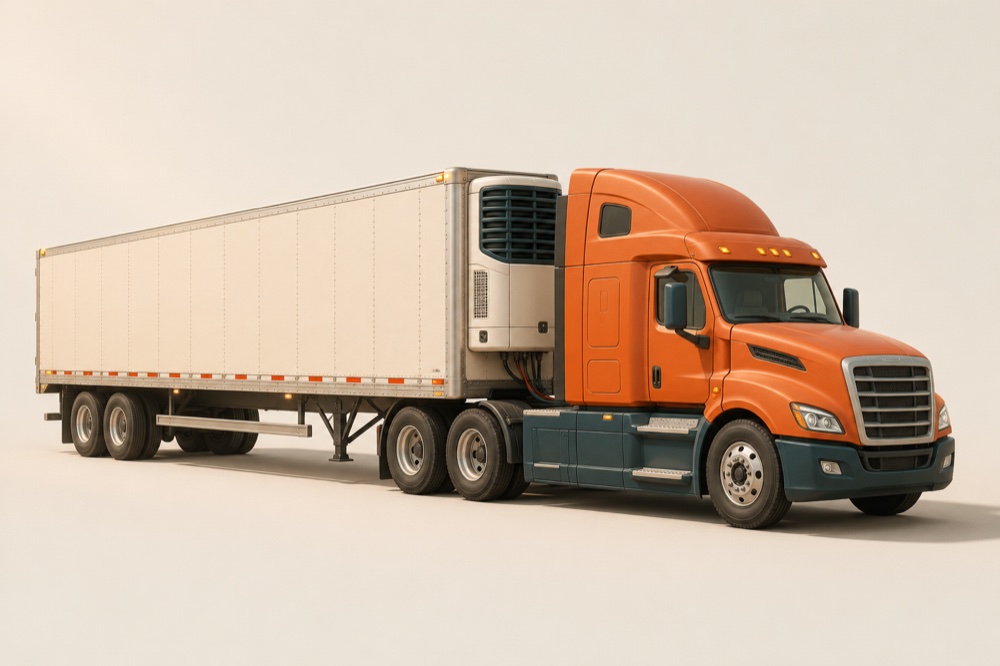
The product tells you the trailer
Frozen bakery, frozen dessert items, and many pastry products need a frozen or chilled set point and a pre-cooled reefer. Chocolate and some coatings can travel dry in mild weather and need a reefer when it is hot, or when the receiver requires a held temperature. Packaged, shelf-stable bakery items often travel in a dry van. If you are unsure, choose “Not sure,” describe the product, and we will help you pick. See frozen food shipping and reefer vs dry van.
These products are often more sensitive to handling and to delays than a standard grocery dry load. A dedicated trailer is the more straightforward plan when the set point has to be held or when the pallets should not move through a terminal network. A few pallets can still be quoted as LTL when we can cover the temperature honestly; tell us the set point in the notes.
Appointments and California lanes
Grocery and food-service warehouses are common receivers, and they often require appointments. Include the window, and any pulping or recorder requirements, when you have them. We quote this freight from Los Angeles-area bakeries and warehouses, from other California origins, and inbound from the rest of the 48 states, including Texas.
What to send
- A clear product description (frozen bakery, chocolate, shelf-stable, and so on)
- Required set point, or a note that the product is shelf-stable
- Pre-cool or continuous-run instructions when they apply
- Origin and destination city or ZIP, pallet count or weight, and the ship date
- Appointment notes for grocery or food-service receivers